Santino Corleone
The GodfatherSantino Corleone, known to everyone except his father as Sonny, is Don Vito Corleone’s eldest son and the most obvious but least secure heir to the Corleone Family. He possesses the strength, courage, generosity, and emotional loyalty expected of a family leader, but not Don Vito’s humility or patience. His temper converts private anger into public violence, and his murder at a tollbooth on the Jones Beach causeway becomes the decisive loss that forces Don Vito to subordinate vengeance to the survival of the family and the return of Michael Corleone.
Identity and Position
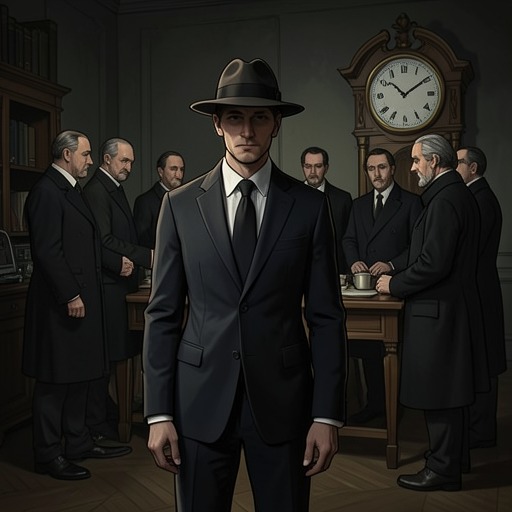
Santino is a first-generation American of Italian parentage, nearly six feet tall and built with extraordinary physical power. His face is described through exaggerated Cupid-like features: a heavy, sensual mouth, a cleft chin, and a body compared to that of a bull. The attention he attracts at Constanzia Corleone’s wedding is not merely social. Older Italian men regard him warily, while younger men admire him, and young matrons measure him with deliberate interest. His presence combines sexual reputation, bodily force, and public authority.
His position within the family is nevertheless uncertain. Santino assists Don Vito in the family business, and his birth makes him the natural successor in the eyes of outsiders, but Don Vito doubts that he can become a Don. The obstacle is not courage or loyalty; it is judgment. Santino lacks his father’s restraint and is governed by a quick, hot temper that repeatedly leads him into error. Don Vito’s concern is therefore also an institutional concern: a family empire protected by layered command requires a leader who can control himself as well as others.
Character and Conduct
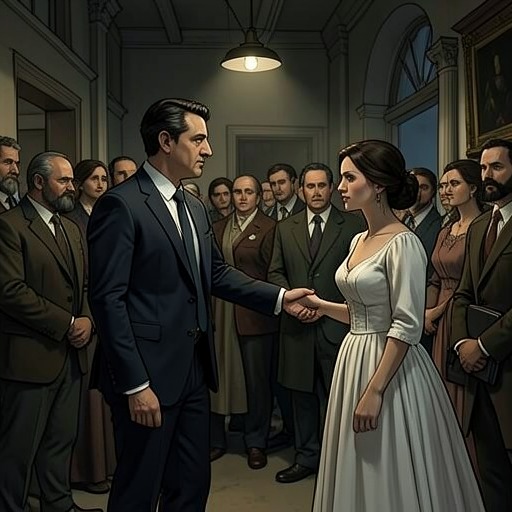
Santino’s most conspicuous weakness is his inability to keep personal desire separate from family responsibility. Despite having a wife and three small children, he pursues Lucy Mancini, Constanzia’s maid of honor, during the wedding festivities. Lucy understands that Santino will never become the great man his father is, yet she is drawn to his strength, courage, and generosity. The contrast is central to his characterization: his appeal lies in immediacy and force, while Don Vito’s authority rests on patience, calculation, and the long accumulation of obligation.
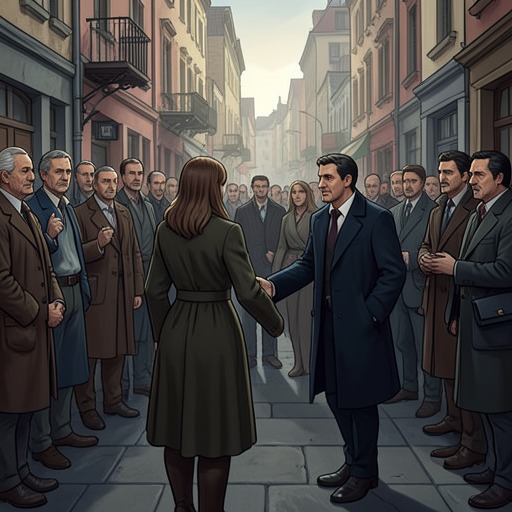
His anger becomes openly physical when he learns that Carlo Rizzi has struck Constanzia. Santino races to the candy store, seizes Carlo by the throat, drags him toward the street, and beats him while Carlo clings to the iron railings of the stoop. Carlo offers no resistance, and even Santino’s bodyguards do not interfere because they believe Santino may kill his brother-in-law. The scene reveals both his protective instinct and its destructive form. He responds to an assault on his sister not through controlled family discipline or strategic punishment, but through a public eruption that allows observers and informers to measure his emotional vulnerability.
Don Vito recognizes the danger in that conduct. After Amerigo Bonasera asks for justice against the two young men who assaulted his daughter, Don Vito privately orders Tom Hagen to pass the matter through Peter Clemenza and the family’s operational chain. The instruction is designed to prevent the violence from being contaminated by uncontrolled emotion. Santino, meanwhile, watches the garden party from the window, and Don Vito concludes that his firstborn son refuses to be instructed and therefore cannot safely run the family business. The judgment is severe because it distinguishes physical masculinity from the disciplined authority required of a Don.
Family Conflict and Succession
Santino’s relationship with Don Vito is marked by affection, disappointment, and an unresolved argument about what power should mean. Don Vito has built his authority by answering supplicants personally, converting assistance into friendship and reciprocal obligation, while also creating layers of insulation between himself and operational violence. The organization places Peter Clemenza and Salvatore Tessio as caporegimes, soldiers beneath them, and a Consigliere between the Don and the men who execute orders. Santino’s temperament does not fit this structure because he makes the personal visible and lets anger override insulation.
The succession problem is sharpened by the family’s unusual reliance on organization rather than simple hereditary right. Tom Hagen’s appointment as Consigliere breaks the tradition that the post should belong to a full-blooded Sicilian, while the caporegimes possess enough power that, in another family, they might have succeeded to the position of Don or separated to form families of their own. Santino therefore stands at the intersection of blood inheritance and institutional control. He is the eldest son, but the narrative repeatedly shows why inheritance alone cannot guarantee competent command.
The contrast with his brothers further defines him. Don Vito imagines that Fredo Corleone would be cowed by a reprimand and that Michael Corleone would respond with a cold smile before withdrawing for months. Santino would sulk and behave badly for weeks. Each son has a different relation to paternal authority, but Santino’s response is the most openly volatile. He is close enough to the family’s center to be expected to lead, yet insufficiently self-governing to embody the system his father has constructed.
Death and Consequences
The attack on Don Vito triggers the crisis that exposes Santino’s limitations as acting leader. After the shooting, Detective John Phillips calls him in rapid succession with the essential news: Don Vito is alive but badly wounded at the French Hospital, while Fredo Corleone has been detained at the Chelsea precinct. Santino receives the information as the family’s immediate responder, and the police connection shows the dense overlap between family power and official institutions. His role is active, but it is also reactive; the family’s decisions are now being driven by attacks and emergencies rather than by Don Vito’s deliberate control.
Santino’s own death is arranged through the vulnerability created by his temper. At the Jones Beach tollbooth, he brakes a Buick, searches for change, and becomes trapped when another car blocks the lane. A false toll collector disappears inside the booth while two armed men approach from the front and another gunman waits in the darkness. In the instant before the shooting, Santino understands that he is going to die. The recognition strips away his habitual violence and leaves him lucid, but it comes too late to alter the situation.
He bursts through the Buick’s door in a reflex for survival. Gunfire from the tollbooth strikes his head and neck, and after he falls with his legs still partly inside the car, the assassins fire into his body and kick his face to disfigure it further. The assault is not only an execution but a personal mark of hatred. His bodyguards arrive minutes later, see him lying at the tollgate, and abandon pursuit, returning to Long Beach to report to Tom Hagen that Sonny is dead.
The consequences extend beyond the death itself. The 1947 war between the Corleone Family and the Five Families combined against it is costly to both sides and is intensified by police pressure over the murder of Captain McCluskey. Don Vito ultimately renounces vengeance for his dead son in the interest of peace, promising that no member of his Family will be attacked without just cause and extreme provocation. He also makes Santino’s death part of the political problem surrounding Michael, who has fled after being accused of killing Virgil Sollozzo and the police captain. Santino’s impulsive life thus produces a disciplined response from his father: the son acts through rage, while the father converts bereavement into negotiation.
Narrative Significance
Santino embodies the conflict between charismatic force and bureaucratic control. His authority comes from presence: size, sexual confidence, courage, generosity, and the readiness to answer insult with immediate violence. Don Vito’s authority is more complex, built from favors, political contacts, protection, money, and carefully separated chains of command. Santino can command fear in a street confrontation, but he cannot yet transform fear into durable order.
His death also demonstrates how the family’s system resembles an alternative government while remaining vulnerable to the same problems as a state: contested succession, territorial pressure, intelligence networks, police intervention, and the management of violence. The later meeting involving Michael Corleone, Tom Hagen, Carlo Rizzi, Peter Clemenza, and Salvatore Tessio takes place under strain because Michael’s takeover is not automatically accepted as hereditary. Santino’s absence is therefore present in the succession debate. His death removes the heir whose claim seemed most natural and leaves the family to pass from Don Vito’s personal rule to Michael’s more systematic power.
By the time Michael establishes himself as the most powerful Family chief in the United States and moves the family’s center toward Las Vegas, the organization has become unchallengeable, with Rocco Lampone as caporegime, Albert Neri directing security for the family-controlled hotels, and Tom Hagen part of Michael’s Western Family. Santino is not remembered as the successful inheritor of his father’s world. He remains the vivid failed successor: generous and brave, fiercely protective, and fatally unable to prevent private passion from becoming public strategy.